WhatApp
+86-15522676451WhatApp
+86-15522676451
In large-scale dredging projects such as port and waterway maintenance, river desilting, and land reclamation, the slurry transportation pipeline acts as the project’s “artery,” making its selection critical. While carbon steel pipes have long dominated the field, with advancements in materials science and engineering technology, high-density polyethylene (HDPE) dredging pipes are rapidly gaining widespread global acceptance due to a series of revolutionary advantages, becoming a key factor in enhancing project efficiency and reliability.
Core Advantage Comparison: Why HDPE Dredging Pipes Stand Out
Compared to traditional steel pipes, the advantages of HDPE dredging pipes are mainly manifested in the following aspects:
1.Exceptional Corrosion and Abrasion Resistance: Longer Service Life, Minimal Maintenance
*Corrosion Resistance: HDPE is a highly inert polymer material with strong resistance to seawater, freshwater, sediments, and various chemicals contained within (such as chlorides, acidic substances). It fundamentally eliminates the issues of rust and electrochemical corrosion faced by steel pipes. This prevents leakage risks and safety hazards caused by wall thinning due to corrosion.
*Abrasion Resistance: The inner wall of HDPE pipes is smooth. Furthermore, its unique flexibility allows it to absorb some impact energy when transporting abrasive sand and gravel particles, often demonstrating better wear resistance than ordinary carbon steel pipes. Their service life is frequently significantly extended when transporting high-solid-content slurry.
*Result: This greatly reduces the frequency of pipeline maintenance, repair, and replacement, leading to significantly lower total lifecycle costs. This is particularly suitable for long-term or permanent dredging projects.
2. Extremely Lightweight and Flexible: Multiplied Installation and Transport Efficiency
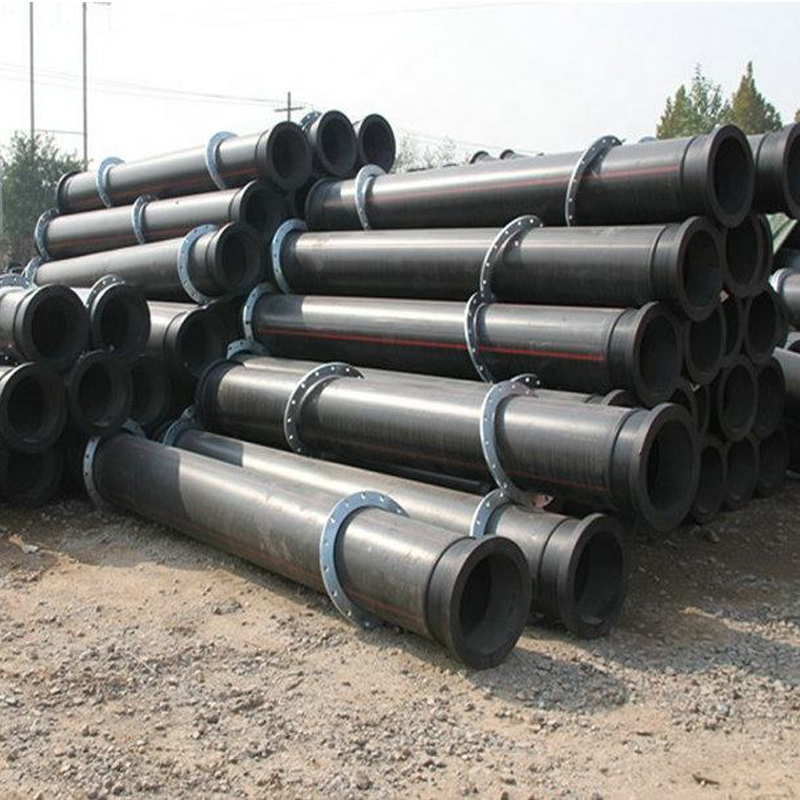
*Lightweight: The density of HDPE pipe is only about 1/8 that of steel pipe. Individual pipes are much lighter, eliminating the need for heavy lifting equipment and dramatically reducing labor and equipment costs for transportation, handling, and pipeline laying.
*Flexible Connection: They can be joined using heat fusion (butt welding) or flanges, forming extremely long continuous sections (hundreds to thousands of meters). This results in far fewer joints compared to steel pipes, which require numerous flanged connections, thereby reducing potential leak points. Their flexibility allows them to adapt to certain degrees of terrain variation and wave motion, enabling more flexible installation.
*Floating Pipeline Application: Easily configured as floating pipelines on water using pontoons, deployment and recovery are quick, significantly enhancing the mobility and efficiency of marine operations, especially suitable for dynamic and variable dredging areas.
3. Superior Hydraulic Performance: Energy Saving and Consumption Reduction
*Absolutely Smooth Inner Wall: The inner wall roughness of HDPE pipe is much lower than that of steel pipe (new steel pipe ~0.05mm, HDPE pipe ~0.01mm or even lower). This “ultra-smooth” inner wall significantly reduces frictional head loss during slurry transport.
*Energy Saving Effect: For the same flow rate and head, it can effectively reduce the required pumping power. Energy savings of an estimated 10%-20% are achievable, leading to substantial electricity cost savings over long-term operation.
*Easy Inspection and Expansion: The system layout is clear. If cables need replacing or adding in the future, wires can be pulled or replaced relatively easily, allowing convenient upgrades and maintenance—aligning with the modern “whole-lifecycle management” approach for infrastructure.
4. Excellent Impact and Fatigue Resistance: Higher Reliability
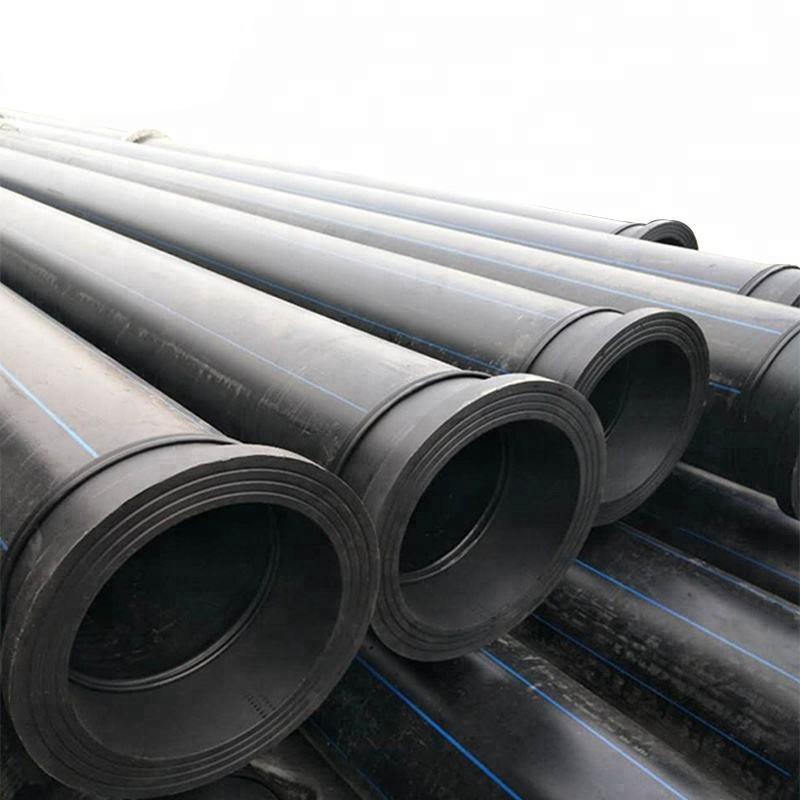
HDPE material possesses good toughness, resisting water hammer pressure fluctuations and external impacts, and is less prone to brittle failure. In harsh marine environments with variable conditions, its fatigue resistance is superior to that of steel pipes, offering greater reliability.
Significant Comprehensive Economic Benefits
Although the initial material cost of HDPE pipes may be similar to or slightly higher than steel pipes, considering the substantial savings in transportation, installation, energy consumption, maintenance, and long service life, their total lifecycle cost is typically lower than that of steel pipes, offering a higher return on investment.
In summary, HDPE dredging pipes, leveraging the enhanced comprehensive performance derived from their material properties, are redefining the standards for dredging transportation pipelines. They not only address the inherent pain points of traditional steel pipes regarding corrosion, weight, and energy consumption but also, with higher reliability, lower comprehensive costs, and a greener operational model, serve as a key driver pushing the dredging industry towards greater efficiency, intelligence, and sustainability. For any new dredging project or upgrade of an old system, HDPE pipelines are a modern solution worthy of primary consideration.
We are not only a product manufacturer, also a solution provider, whether you have a Question or Request For Quotations, we're here to help.