WhatApp
+86-15522676451WhatApp
+86-15522676451
Introduction
In Africa, tilapia is one of the most important aquaculture species, especially in West Africa where market demand continues to grow. However, many farms still use traditional steel cages, facing problems such as rust, high maintenance costs, and poor wave resistance. This article shares a real experience of a Ghanaian tilapia farm that switched to HDPE cages, offering a reference for other fish farmers.
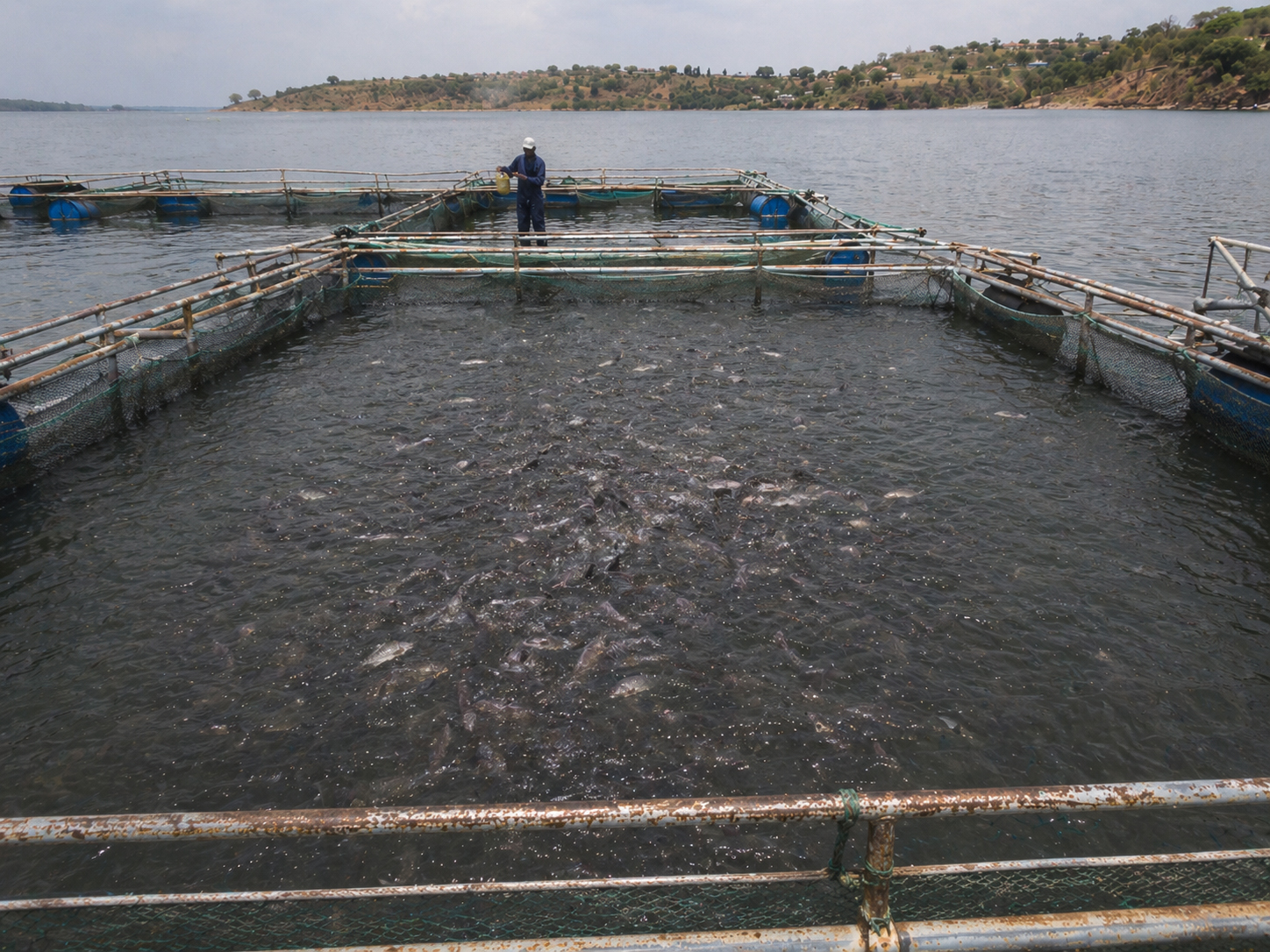
Background: Years of Trouble with Steel Cages
The farm is located on Lake Volta in Ghana, mainly farming Nile tilapia. The rainy season in this region often brings strong winds and rough waters, placing high demands on farming equipment. For eight years, the farm used steel cages, but problems accumulated year after year:
• Welds rusted and began leaking within two years (even in freshwater, corrosion was an issue)
• Cage frames deformed, causing net abrasion and occasional tilapia escapes
• Every rainy season was followed by extensive repairs, with high downtime and labor costs
The farm tried to increase maintenance frequency, but the inherent weaknesses of steel materials could not be solved.
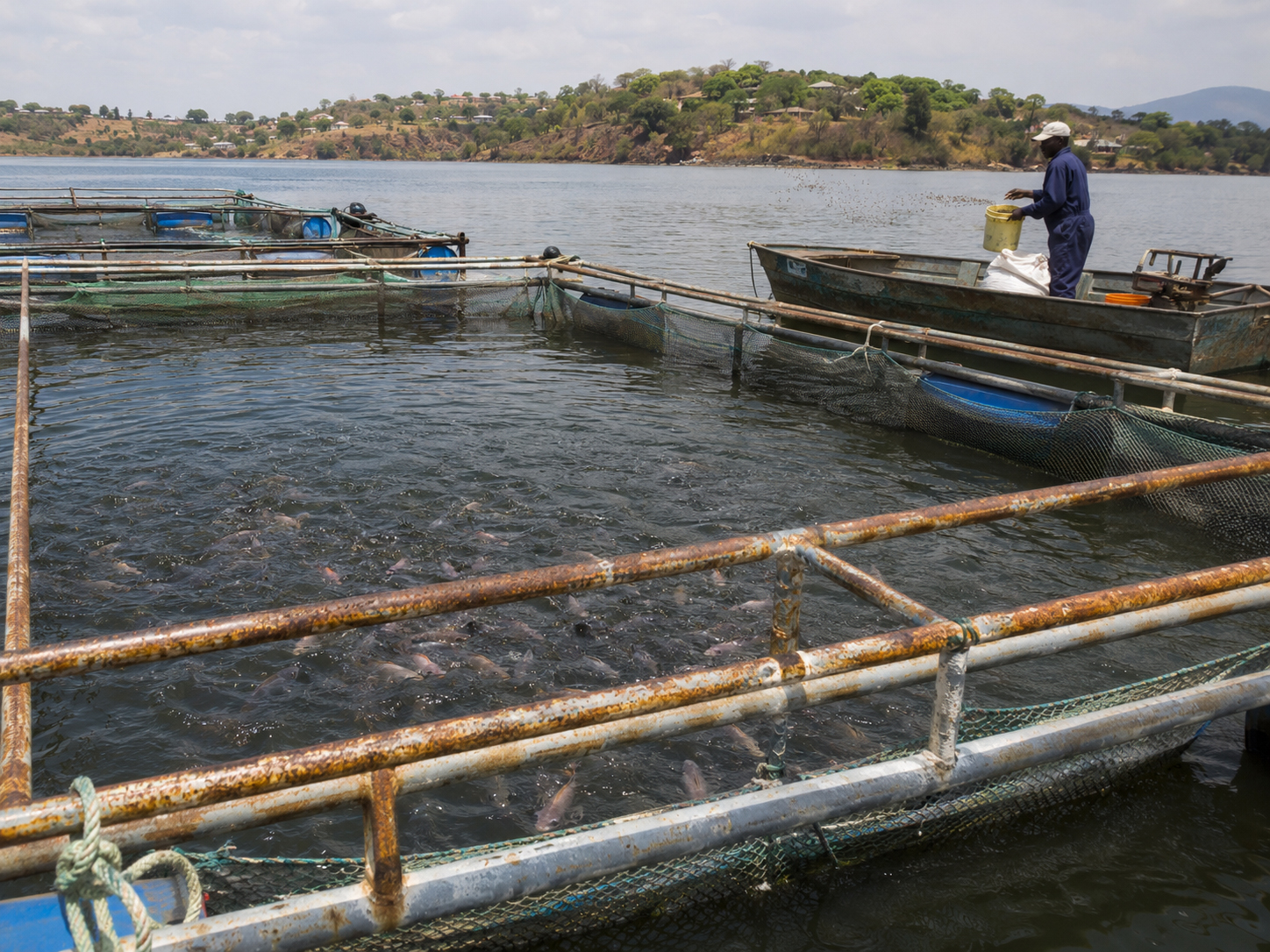
Solution: Switching to HDPE Cages
At the end of 2023, the customer started looking into HDPE cages. After comparing material properties, anti-aging test reports, and similar case studies, they decided to purchase 16 HDPE round cages (30 meters in diameter). We provided complete installation manuals, video guides, and remote technical support. The customer’s local team assembled and deployed the cages themselves, with all technical questions answered promptly through online communication.
Results: Surviving the Rainy Season
After the cages were put into operation, they went through two rainy‑season storms (maximum wind speed about 25 m/s, waves nearly 2 meters high). The customer reported:
• All 16 cage frames remained crack‑free and not deformed
• Pipe welds and connectors showed no obvious aging or loosening
• The net fixing system operated stably, and tilapia survival rates remained normal
• Only routine inspections were needed after each storm – no production shutdowns for repairs
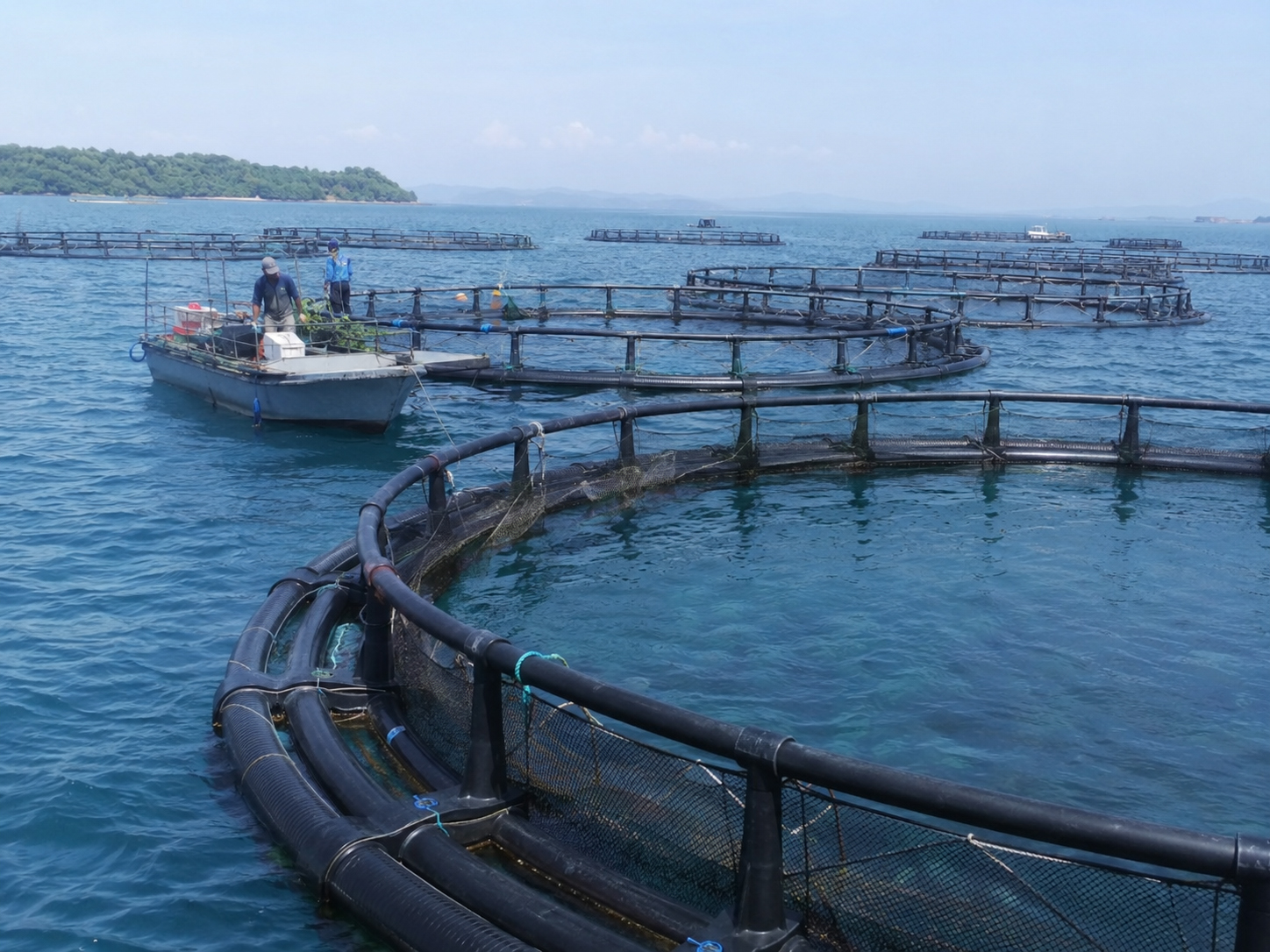
The customer specifically mentioned that the remote support was very responsive, and the installation manuals and video guides were clear enough for their local team to complete all work independently.
Conclusion
This Ghanaian tilapia farm case shows that HDPE cages offer clear advantages in African freshwater reservoir environments: wave resistance, corrosion resistance, and lower maintenance costs. For African aquaculture businesses looking to improve farming efficiency and equipment reliability, switching from steel to HDPE is a worthwhile option.
We are not only a product manufacturer, also a solution provider, whether you have a Question or Request For Quotations, we're here to help.